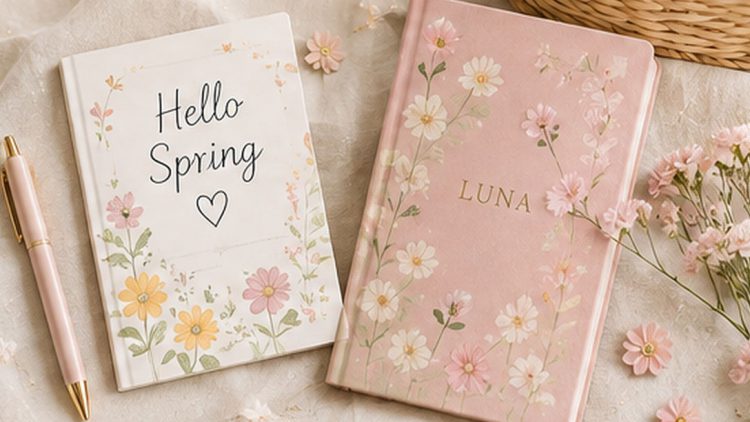
Gratitude journaling is one of the simplest ways to bring more mindfulness, positivity, and intention into everyday life. You do not need a complicated routine or hours of free time. A notebook, a comfortable pen, and a few quiet minutes are enough to begin.
The purpose of a gratitude journal is simple: to intentionally notice and record the things you appreciate. These can be important moments, such as reaching a personal goal, but they can also be very small experiences—a peaceful morning, a favorite drink, a thoughtful message, or a beautiful sunset.
1. Choose a Journal You Love
Start with a notebook that makes you want to write. Your journal does not need to be expensive or elaborate. What matters is that it feels personal and enjoyable to use.
Think about the details that make stationery special to you. You may prefer soft colors, floral illustrations, celestial patterns, minimalist pages, or a compact notebook that fits easily inside your bag.
When your journal feels like something you genuinely enjoy using, opening it each day becomes a pleasant ritual rather than another task.
2. Create a Consistent Routine
Consistency is more important than writing long entries. Choose a time that naturally fits your daily schedule.
You might write after waking up, during your morning coffee, before starting work, or just before going to sleep.
Even five minutes can be enough.
Keeping your journal somewhere visible can also remind you to use it. Place it beside your bed, on your desk, or next to something that is already part of your daily routine.
3. Begin with Three Simple Things
A blank page can sometimes feel intimidating. Instead of trying to write an entire diary entry, begin with a simple question:
“What are three things I am grateful for today?”
Your answers do not have to be extraordinary.
You might write:
- A quiet cup of coffee in the morning
- A conversation with someone you love
- Finishing something you had been putting off
Over time, this simple practice encourages you to notice positive moments while they are happening.
4. Be Specific
Instead of repeatedly writing general statements such as “I am grateful for my family,” describe a particular experience.
For example:
“I am grateful for the dinner we shared tonight and how much we laughed together.”
Specific memories make your journal much more meaningful when you read it again months or years later.
They also encourage you to pay closer attention to everyday life.
5. Make the Journal Your Own
There are no strict rules for gratitude journaling.
Decorate your pages with stickers, washi tape, drawings, photographs, colored pens, or anything else that inspires you.
Some days you may write a full page. On busy days, you may only write one sentence.
Both are perfectly fine.
The goal is not to create a perfect journal. The goal is to create a personal space where you can slow down and appreciate what matters to you.
As your journal grows, occasionally revisit previous pages. Reading about moments you may have forgotten can be surprisingly uplifting.
A gratitude journal eventually becomes more than a collection of notes. It becomes a record of small experiences, personal growth, relationships, achievements, and ordinary moments that made life meaningful.
Start with one page today. You may be surprised by how much beauty you begin to notice.